Smelted, Shipped, and Sold Elsewhere: The Fractured Journey of Scottish Gold After Extraction
Gold extracted from Scottish ground rarely becomes a finished product on British soil. That simple fact, seldom discussed openly within the industry, carries profound consequences for producers, investors, and the broader case for developing a more self-sufficient domestic precious metals sector. Tracing the physical and commercial journey of Scottish gold — from the moment it leaves the mine to the point at which it is priced, refined, and sold — reveals a supply chain that is both geographically dispersed and structurally inefficient.
Stage One: Doré and the First Departure
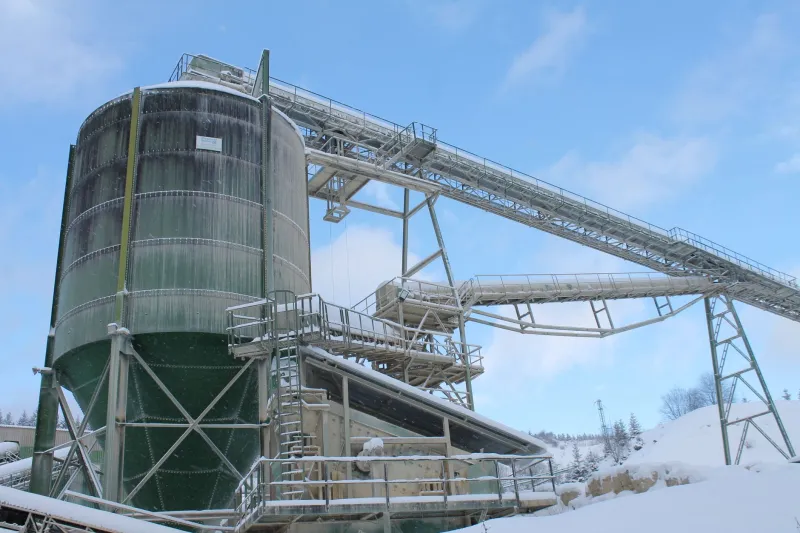
At the mine site, extracted ore is processed through crushing, milling, and concentration to produce what is known as doré — an alloy of gold and silver, typically containing impurities, cast into rough bars for transport. This is the raw material that departs Scotland, and it is already a product of considerable value. At Cononish, Scotland's sole operating gold mine, doré production represents the culmination of an extensive extraction and processing operation. Yet at this stage, the metal is still far from a tradeable bullion product.
Doré bars must be transported to a refinery capable of separating the gold and silver content to the levels of purity demanded by international commodity markets. The London Bullion Market Association (LBMA) sets the benchmark: Good Delivery bars must contain a minimum of 99.5% fine gold. Achieving that standard requires sophisticated chemical and electrochemical processes that are simply not available within Scotland — or, indeed, anywhere else in the United Kingdom outside of a handful of specialist facilities.
Stage Two: The Logistics of Moving Raw Metal
Shipping doré is not a straightforward logistical exercise. Precious metals transport requires specialist secure carriers, insurance underwriting tailored to high-value commodities, and compliance with customs documentation that varies depending on destination. The costs associated with this phase are rarely disclosed publicly by mining companies, but they represent a genuine drag on net realisable value.
For a small Scottish producer operating on tight margins, the per-ounce cost of secure transport — whether to a European refinery or further afield — can be disproportionately significant. Larger mining operations benefit from economies of scale that reduce this burden; junior explorers and early-stage producers do not. The absence of a nearby, LBMA-accredited refinery compounds the problem, effectively placing Scottish producers at a structural disadvantage relative to their counterparts in countries with integrated domestic infrastructure.
Stage Three: Overseas Refining and the Value Gap
The majority of gold refined from British-produced doré is processed at facilities on the European continent or, in some cases, further afield. Switzerland, home to several of the world's largest precious metals refineries, handles a significant proportion of global doré throughput. Treatment charges — the fees refineries levy for processing — are negotiated commercially, and the terms available to small producers are typically less favourable than those secured by major mining companies.
Beyond the direct cost of refining, there is a subtler form of value erosion at work. When Scottish gold is refined overseas, the premium that might otherwise attach to its provenance — its origin, its story, its potential appeal to ethically conscious buyers — is effectively dissolved into a generic commodity pool. The metal emerges from a Swiss or Belgian refinery indistinguishable from gold sourced anywhere else in the world. The narrative value, which could command a premium in certain markets, is lost entirely.
Stage Four: Sale, Pricing, and Who Captures the Margin
Once refined, gold is typically sold either directly into the spot market or through forward contracts negotiated in advance of production. The LBMA gold price, set twice daily in London, is the reference point for virtually all transactions. Scottish producers, like all mine operators, are price-takers in this market — they have no meaningful ability to influence the price at which their metal trades.
The intermediaries who operate between the mine and the final buyer — logistics firms, refineries, bullion dealers, and brokers — each extract a margin from the transaction. For a vertically integrated major mining group, these costs are managed internally or offset by scale. For a Scottish junior miner, they represent a series of unavoidable deductions from an already constrained revenue stream. The cumulative effect is that the price received at the mine gate is materially lower than the headline spot price that investors monitor.
The Case for a More Integrated Domestic Infrastructure
The fragmentation described above is not inevitable. It is, in large part, a consequence of historical underinvestment in UK precious metals infrastructure and the absence of a strategic framework for developing domestic refining capacity. A number of industry voices have argued — with increasing urgency — that Scotland's emerging gold sector would benefit enormously from closer proximity to accredited refining, assaying, and hallmarking facilities.
The economic argument is straightforward: retaining more of the value-addition process within Scotland would increase the net revenue available to producers, reduce logistical exposure, and strengthen the commercial case for continued exploration and development. It would also create ancillary employment and expertise in sectors that currently do not exist at meaningful scale within Scotland.
The provenance argument is equally compelling. Consumer demand for traceable, responsibly sourced precious metals is growing across jewellery, investment products, and luxury goods. Scottish gold, with its distinctive geological heritage and relatively low-impact extraction context, is well positioned to attract a premium — but only if the supply chain is structured to preserve and communicate that origin. At present, it is not.
What Investors Should Understand
For those with capital deployed in Scottish gold mining equities or royalty structures, the supply chain matters in concrete financial terms. The difference between a producer who has secured favourable refining terms and one who has not can translate directly into cash flow and, ultimately, returns. Due diligence on Scottish mining investments should therefore extend beyond resource estimates and drilling results to encompass the full commercial pathway from mine to market.
Equally, any future development of domestic refining or assaying capacity — whether through private investment, industry collaboration, or public policy — would represent a material positive catalyst for the sector as a whole. Investors who understand the current inefficiencies are better placed to recognise the significance of such developments when they emerge.
Scottish gold has a long and storied history. Ensuring that its modern commercial journey is as efficient, transparent, and value-retentive as possible is not merely a matter of industrial policy. It is a prerequisite for building a gold sector worthy of the country's geological endowment.