Cononish Under the Microscope: Hard Lessons from Scotland's Sole Operating Gold Mine
Cononish Under the Microscope: Hard Lessons from Scotland's Sole Operating Gold Mine
In a country whose geological foundations hold genuine gold potential, only one operation has thus far crossed the threshold into commercial production. Cononish, situated in the Loch Lomond and The Trossachs National Park near Tyndrum in Argyll, carries a weight of significance that extends well beyond its relatively modest resource base. It is Scotland's proof of concept — and its story is considerably more complicated than promotional literature tends to suggest.
For junior mining companies assembling Scottish project pipelines, and for investors evaluating whether those pipelines represent credible opportunity or wishful thinking, Cononish is essential reading. The mine did not arrive at production smoothly. It arrived battered, delayed, and restructured — but it arrived. Understanding precisely why that journey unfolded as it did is the most valuable due diligence exercise available to anyone operating in this market.
Discovery, Dormancy, and the Long Wait for Capital
The Cononish deposit was identified in the 1980s, with exploration work confirming a vein-hosted gold-silver system of sufficient grade to warrant serious attention. Yet the gap between geological confirmation and commercial development stretched across decades. This extended dormancy was not primarily a geological problem. The mineralisation was well understood. The obstacles were financial, regulatory, and structural — a combination that will feel familiar to anyone tracking junior mining development in the UK today.
Several operators examined the project over the years without advancing it to production. The economics were sensitive to gold price movements, financing was difficult to secure for a relatively small operation in a jurisdiction without an established modern mining industry, and the planning environment presented its own complexities. Cononish spent a long time in a holding pattern that many Scottish projects still occupy.
The critical turning point came when Scotgold Resources (no relation to this publication) acquired the project and committed to advancing it through permitting and into development. Even then, the path was far from linear.
The Planning Battle: A Cautionary Chapter
Perhaps the most instructive episode in Cononish's history is its encounter with the planning system. The mine sits within a national park boundary — a designation that carries significant weight in Scotland's land-use framework. An initial planning application was refused, with the national park authority citing concerns about landscape impact, infrastructure, and the precedent of industrial activity within a protected area.
This refusal was not the end of the project, but it added years to the development timeline and forced a redesign of the proposed surface infrastructure. A revised application, incorporating a more compact surface footprint and enhanced environmental mitigation measures, was eventually approved. The lesson here is not that national park locations are impossible for mining — Cononish itself disproves that — but that the planning process in such settings demands exceptional preparation, genuine community engagement, and a willingness to redesign rather than simply reapply.
Junior miners eyeing Scottish projects in similarly sensitive landscapes should treat the Cononish planning history as a detailed case study in what regulators will scrutinise, what objectors will raise, and what design compromises may ultimately be required.
Financing the Build: Equity, Debt, and the Dilution Reality
Securing the capital to construct Cononish required multiple financing rounds, and the equity dilution experienced by early shareholders was substantial. This is not an unusual outcome for junior mining development, but the Cononish experience underlines the degree to which small-scale UK operations face a structurally difficult fundraising environment.
The project was not large enough to attract the major mining houses, yet it was too capital-intensive for most retail investors to fund at the individual level. This middle ground — too big for crowdfunding, too small for institutional mining finance — is where many Scottish junior projects find themselves stranded. Cononish navigated it through a combination of listed equity raises, streaming arrangements, and debt facilities, each carrying its own cost and condition set.
Investors evaluating comparable Scottish projects should examine not just the stated capital requirement but the realistic financing pathway. A project with a credible plan for closing its funding gap is fundamentally different from one that lists a capital requirement without a corresponding strategy for meeting it.
Production Economics: Projection Versus Reality
Cononish entered production with a processing plant designed to handle ore at grades consistent with the resource estimate. Early production figures, however, illustrated the gap that frequently exists between modelled economics and operational reality. Mill throughput, recovery rates, and ore dilution all interact in ways that forecasting models can approximate but rarely capture precisely.
The mine's silver by-product, while meaningful, has not transformed the economics in the way that some early-stage analyses implied it might. Gold remains the dominant revenue driver, and the operation's financial performance is therefore closely tied to the gold price — a straightforward observation, but one worth stating explicitly when assessing the risk profile of any single-commodity junior producer.
For investors, the Cononish production record offers a baseline for scepticism about junior mining projections more broadly. The question to ask of any Scottish development project is not whether its modelled economics look attractive, but how much those economics degrade when real-world operational factors are applied. A project that remains viable under a stress-tested scenario is a meaningfully different proposition from one that only works under optimal assumptions.
What Cononish Got Right
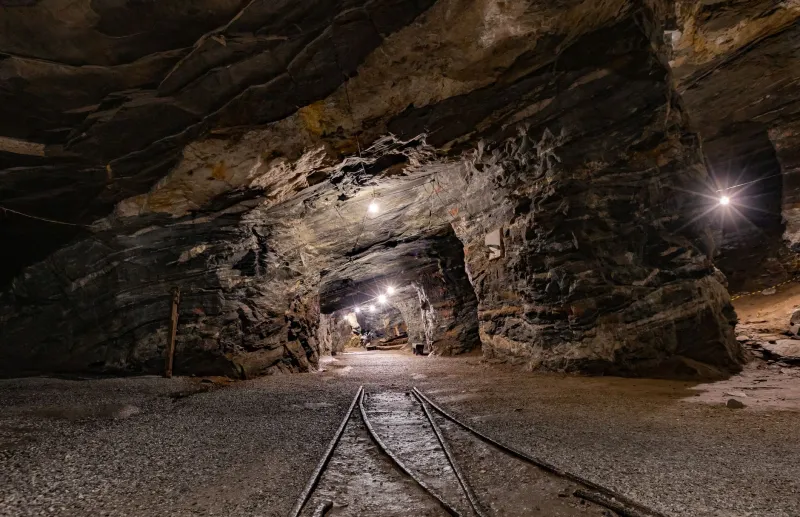
Focusing exclusively on the difficulties would be unfair and analytically incomplete. Cononish succeeded in doing something no other operator had managed in the modern era: it brought a Scottish gold mine into commercial production. That achievement required persistence through planning refusals, creative financing in a difficult environment, and operational management of a genuinely challenging underground vein system.
The mine also demonstrated that Scottish gold extraction can meet contemporary environmental and regulatory standards. Its development generated local employment in a rural area with limited economic alternatives, and it produced domestically sourced gold at a time when the provenance of precious metals is attracting growing interest from consumers and investors alike.
These are not trivial accomplishments. They establish that the regulatory and operational barriers to Scottish gold mining, while real, are not insurmountable. For the next generation of Scottish projects, Cononish provides the evidence that the journey is possible — along with a detailed map of where the obstacles lie.
Applying the Cononish Framework
Any junior miner or investor approaching a Scottish gold project would benefit from asking a structured set of questions derived from the Cononish experience. Does the project have a credible planning pathway, and has the operator genuinely engaged with the relevant authorities and communities? Is the financing plan realistic for an operation of this scale, and has the dilution risk been honestly communicated to shareholders? How do the projected production economics hold up when stress-tested against lower grades, reduced throughput, and gold prices below current spot?
Cononish does not provide a template for guaranteed success. No single mine can do that. What it provides is something more valuable: a detailed, real-world account of what Scottish gold development actually involves, stripped of the optimism that tends to characterise early-stage promotional materials.
For those willing to study that account carefully, the mine in Argyll is less a remote industrial facility than a standing curriculum — one that Scotland's next generation of gold projects cannot afford to ignore.