The Refining Gap: Why Scotland's Gold Leaves Britain Unfinished — and What That Costs the Nation
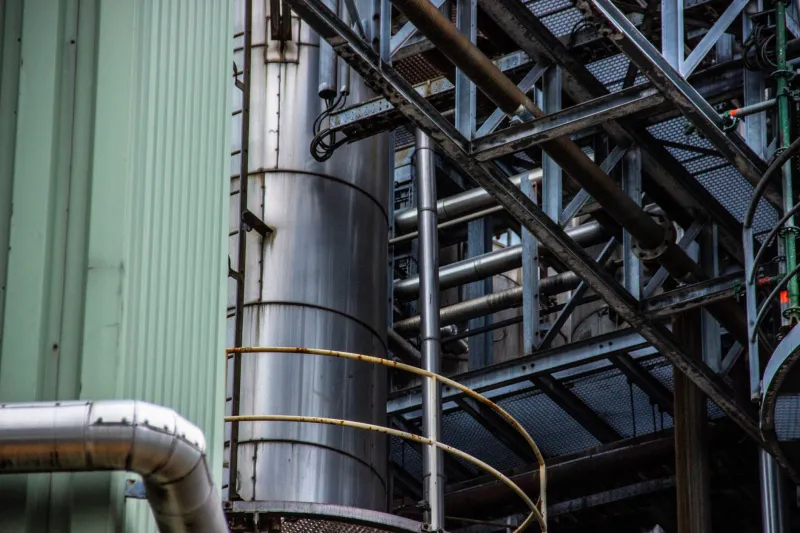
The Refining Gap: Why Scotland's Gold Leaves Britain Unfinished — and What That Costs the Nation
There is something quietly paradoxical about the UK's relationship with its own gold. In a country with a documented history of precious metal extraction stretching back to Roman occupation, and with active exploration programmes operating across Scotland today, virtually every gram of gold that emerges from British ground is shipped abroad before it reaches its final form. Switzerland, South Africa, and the UAE — among others — complete the process that Britain begins. The value added through refining accrues elsewhere.
This is not merely an abstract economic observation. It is a structural characteristic of the UK's extractive sector that has real consequences for the commercial viability of domestic mining operations, for the country's strategic positioning in commodity markets, and for the long-term prospects of an industry that many believe stands on the cusp of meaningful expansion in Scotland.
What Refining Actually Means — and Why It Matters
To appreciate the significance of this gap, it is worth clarifying what gold refining involves. Raw gold extracted from ore — whether through gravity concentration, flotation, or leaching — is rarely pure. Doré bars, the standard output of most small and medium-scale mining operations, typically contain a mixture of gold, silver, and various impurities. The refining process separates and purifies these metals to the standard required by financial markets, jewellery manufacturers, and industrial users.
This final stage of processing is where a disproportionate share of the value chain resides. The London Bullion Market Association (LBMA), which sets the benchmark standards for gold traded on international markets, requires that gold meet a minimum fineness of 995 parts per thousand to achieve 'Good Delivery' status. Achieving that standard requires specialist equipment, rigorous quality control systems, and significant capital investment — none of which currently exists at scale within the United Kingdom.
The consequence for a Scottish mining operator is straightforward: the doré produced at site must be transported to an accredited overseas refinery, refined at a cost that erodes margin, and returned — or sold — in a form that commands the full market price. The operator captures the mining margin. The refiner captures the processing margin. Britain, as a sovereign entity, captures neither.
A Post-Brexit Blind Spot
The departure of the United Kingdom from the European Union prompted extensive debate about supply chain resilience, strategic autonomy, and the need to reduce dependency on foreign intermediaries in critical industries. Pharmaceuticals, semiconductors, and food production all featured prominently in that conversation. Precious metals refining did not.
This omission is difficult to justify on strategic grounds. Gold occupies a unique position in the global financial system — one that the Bank of England, which holds one of the world's largest gold vaults beneath Threadneedle Street, understands better than most. It is simultaneously an industrial input, a monetary reserve asset, and a safe-haven investment. The United Kingdom's inability to refine its own domestically extracted gold to LBMA standards represents a curious gap in what is otherwise a sophisticated precious metals ecosystem.
 Photo: Bank of England, via files.idyllic.app
Comparisons with smaller nations make the point more sharply. Finland, a country with a considerably more modest gold mining tradition than Scotland's, operates domestic refining capacity through the Boliden Harjavalta facility, which processes precious metals alongside base metal concentrates. Kazakhstan, which has aggressively developed its mining sector over the past two decades, has invested in sovereign refining infrastructure as a deliberate policy choice, recognising that value capture — not merely extraction — is the true measure of a mature mining economy. Even Tanzania and Rwanda have, in recent years, pursued domestic refining initiatives as part of broader mineral beneficiation strategies.
Britain, with its world-class financial infrastructure, its established commodity trading expertise, and its LBMA at the centre of global gold pricing, arguably has stronger foundations than any of these nations from which to build a domestic refining capability. The question is why it has not done so.
The Commercial Calculus
The honest answer is that, until recently, the economic case was weak. Scotland's current gold output is modest by international standards. Cononish, operated by Scotgold Resources, is the country's only producing gold mine, and while its output is commercially meaningful for the company, it falls well short of the volumes that would conventionally justify the capital expenditure required to establish a new refinery.
Refining infrastructure is expensive. An LBMA-accredited facility requires not only physical plant but also the operational history, audit trail, and quality management systems that underpin market confidence. Building these from scratch, against a backdrop of uncertain domestic supply volumes, is a challenging commercial proposition for any private investor.
However, this calculus changes considerably if one adopts a longer-term and broader sectoral perspective. Scotland has multiple advanced exploration projects in development. The Grampian Highlands, the Southern Uplands, and Shetland all host mineralisation that could, subject to permitting and financing, add meaningfully to domestic production in the coming decade. A refinery built to serve today's output would be undersized; one designed for the sector's potential trajectory might look rather differently attractive.
 Photo: Grampian Highlands, via mythcreants.com
There is also the question of feedstock diversity. A Scottish or UK-based refinery need not depend exclusively on domestically mined gold. It could process imported doré from other jurisdictions, silver and platinum group metals recovered as by-products, and potentially electronic waste — a growing source of recoverable precious metals that currently flows predominantly to continental European processors.
What Would It Take?
Developing a credible domestic refining capability would require a combination of private investment and policy support. The latter need not take the form of subsidy; it might instead involve streamlined permitting pathways, inclusion of precious metals refining within enterprise zone frameworks, or the integration of refining capacity into the broader critical minerals strategy that the UK Government has been developing in recent years.
The LBMA itself could play a constructive role. As the custodian of Good Delivery standards, it is well placed to support the development of new accredited facilities and to signal to markets that UK-refined gold carries the same credibility as product processed in Zurich or Dubai.
Industry consolidation could also accelerate the case. If Scotland's exploration pipeline matures and several new operations reach production simultaneously, the aggregate feedstock available to a domestic refiner becomes materially more attractive. There is a coordination challenge here — individual operators acting independently are unlikely to commission refining infrastructure, but a consortium model, potentially with public sector participation, could resolve this.
The Broader Argument
At its core, the case for domestic gold refining is an argument about value sovereignty. A nation that extracts a natural resource but exports it in unfinished form is, in economic terms, subsidising the industrial capacity of its trading partners. This is a pattern that development economists have long identified as a constraint on the wealth of resource-rich nations — and it is no less relevant when applied to a developed economy such as the United Kingdom.
Scotland's gold is, by international standards, a modest resource. But it is a real one, with a genuine market, a growing exploration community, and an investment ecosystem that is beginning to take it seriously. The question of whether Britain should complete the value chain on home soil — rather than exporting that opportunity along with the ore — deserves a more prominent place in the conversation about what a modern, strategically aware UK industrial policy actually looks like.
The gold is here. The expertise is here. The financial infrastructure is here. What is missing, thus far, is the ambition to connect them.