Reading the Rock: How Scottish Geology Gives Investors a Crucial Edge Before Drilling Begins

When a junior mining company publishes a prospectus, the language can feel impenetrable. Terms such as 'orogenic gold system', 'shear-hosted mineralisation', and 'lithological contact zones' are scattered across technical reports as though self-explanatory. For the non-specialist investor, this creates a significant information asymmetry — one that, left unaddressed, can lead to poorly calibrated decisions about capital allocation.
The good news is that geological literacy does not require a doctorate in earth sciences. A foundational understanding of the rock formations that make Scotland genuinely prospective for gold — and the warning signs that suggest a site may be overstated — can be acquired with modest effort. In a country where credible gold mineralisation has been confirmed across multiple regions, this knowledge is increasingly a practical due diligence tool rather than an academic curiosity.
Why Scotland Is Geologically Significant for Gold
Scotland's geological history is, by any measure, remarkable. The landmass has been shaped by successive episodes of tectonic collision, volcanic activity, and deep crustal deformation stretching back over 3 billion years. These processes did not merely sculpt the landscape; they created the structural conditions under which gold-bearing fluids could migrate, concentrate, and ultimately crystallise within host rocks.
Two regions stand out as particularly prospective: the Grampian Highlands and the Southern Uplands. Each has a distinct geological character, and understanding the differences between them helps investors contextualise the claims made by exploration companies operating in either area.
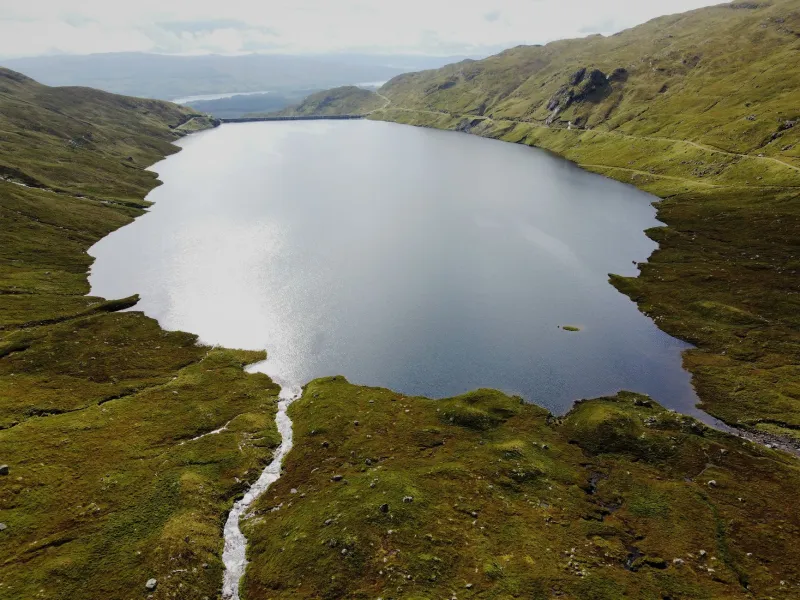
 Photo: Southern Uplands, via shop.super-b.com
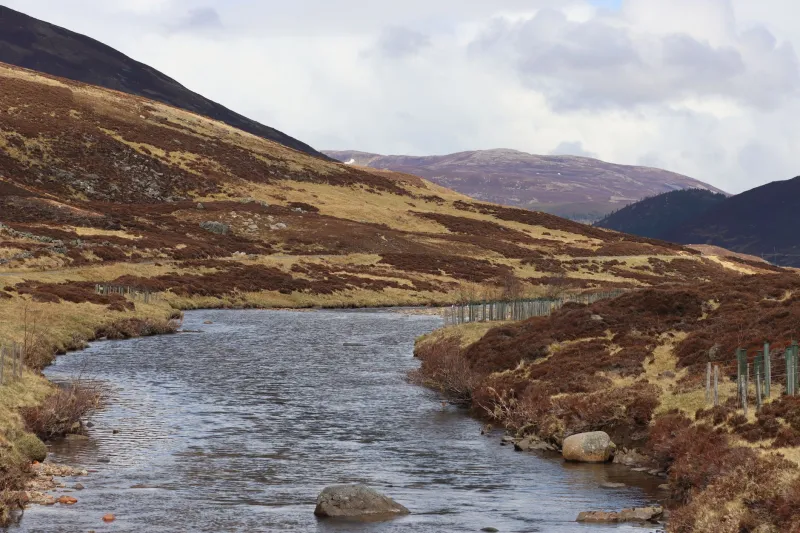
 Photo: Grampian Highlands, via cdn.manomano.com
The Grampian Highlands, which encompass much of the terrain between the Highland Boundary Fault and the Great Glen Fault, are underlain by ancient metamorphic and igneous rocks that were intensely deformed during the Caledonian orogeny — a mountain-building episode that concluded roughly 400 million years ago. This deformation created the structural corridors through which gold-bearing hydrothermal fluids travelled. The Kildonan district in Sutherland, which witnessed Scotland's most celebrated gold rush in 1869, sits within this broader geological province.
The Southern Uplands, by contrast, are dominated by a sequence of folded marine sedimentary rocks — known as turbidites — that were accreted onto the edge of the ancient continent during the same tectonic episode. Though less celebrated historically, this region has attracted renewed exploration interest in recent decades, with several operators identifying gold occurrences associated with fault systems that cut across the sedimentary sequence.
Greenstone Belts: The Global Gold Standard
Investors familiar with major gold-producing regions in Canada, Australia, or West Africa will have encountered the term 'greenstone belt'. These ancient sequences of volcanic and sedimentary rocks, typically Archaean or Proterozoic in age, host some of the world's most prolific gold deposits. The greenstones of the Abitibi region in Ontario and the Yilgarn Craton in Western Australia are perhaps the most famous examples.
Scotland does not possess classic Archaean greenstone belts of the type found in those jurisdictions. However, portions of the Grampian Highlands contain analogous sequences — metamorphosed volcanic and sedimentary assemblages that share key characteristics with greenstone-hosted gold systems elsewhere. When an exploration company references 'greenstone-like sequences' or 'metavolcanic packages' in a Scottish context, it is drawing on this broader geological comparison. Investors should scrutinise whether the analogy is substantiated by independent technical assessments rather than marketing literature alone.
Shear Zones: Nature's Gold Conduits
Perhaps the single most important structural feature for gold mineralisation in Scotland is the shear zone. In simple terms, a shear zone is a belt of intensely deformed rock produced when large crustal blocks move past one another. The deformation generates fractures, reduces rock permeability in certain directions, and creates pathways along which hydrothermal fluids — hot, chemically active waters circulating deep within the crust — can migrate upwards.
As these fluids cool and their chemistry changes, dissolved gold precipitates and accumulates within the shear zone. Over geological time, repeated fluid pulses can deposit economically significant concentrations. Scotland's major fault systems, including the Highland Boundary Fault and the Southern Uplands Fault, are associated with shear-related deformation, and several known gold occurrences are spatially linked to subsidiary structures within these broader fault corridors.
For investors, the presence of a well-defined shear zone within a project area is a meaningful positive indicator — but it is not sufficient on its own. The key question is whether fluid flow was channelled into that shear zone in a manner that allowed gold to concentrate at accessible depths. This is what geochemical sampling and eventually drilling are designed to establish.
Quartz Vein Systems: Visible Evidence of Past Fluid Activity
Quartz veins are among the most recognisable features of gold-prospective terrain, and they are commonly cited in Scottish exploration reports. When hydrothermal fluids cool within a fracture system, silica precipitates to form quartz — a hard, pale mineral that stands out clearly against darker host rocks. Gold often travels in association with these silica-rich fluids, and while not every quartz vein contains gold, auriferous (gold-bearing) veins are frequently characterised by specific textures, associated sulphide minerals such as pyrite and arsenopyrite, and particular orientations relative to the host structure.
The presence of quartz vein systems at surface is an encouraging indicator, but investors should be cautious about overinterpreting visible vein outcrop. A photogenic quartz vein in a press release does not confirm economic mineralisation. What matters is the spatial relationship between the vein and the controlling structure, the continuity of the vein at depth, and the gold grades returned from systematic sampling.
Translating Geology into Due Diligence
Armed with a basic understanding of these concepts, investors can ask more penetrating questions when reviewing exploration company reports and presentations. Key considerations include:
Structural context: Is the gold mineralisation associated with a defined shear zone or fault corridor, or does it appear to be spatially random? Structurally controlled deposits tend to offer greater predictability in terms of continuity.
Independent verification: Has the geological model been reviewed by a qualified person under the JORC Code or an equivalent reporting standard? Self-reported geological narratives without independent validation warrant scepticism.
Geochemical data quality: Soil and stream sediment sampling programmes generate the primary datasets used to identify drill targets. Investors should ask whether sampling was conducted on a systematic grid, how samples were dispatched and analysed, and whether quality control procedures were applied.
Historical context: Scotland has a reasonably well-documented exploration history. If a project area has been drilled previously, the results of that earlier work — whether positive or negative — should be disclosed and explained.
The Informed Investor's Advantage
Geological due diligence will never substitute for professional advice, and no investor should commit significant capital to a mining exploration company on the basis of geological analysis alone. Financial fundamentals, management track records, and regulatory status all demand equal scrutiny.
Nevertheless, in a sector where optimistic narratives are easily constructed and technical complexity can obscure weak fundamentals, a working familiarity with Scotland's gold geology provides meaningful protection. It allows investors to distinguish between companies building credible, evidence-based exploration programmes and those trading primarily on the romance of Scottish gold.
The rocks beneath Scotland's hills have been accumulating their secrets for hundreds of millions of years. Learning to read them — even imperfectly — is one of the most practical steps a UK investor can take before committing to this compelling but demanding asset class.