Overlooked and Underdrilled: The Scottish Greenfields Attracting a New Generation of Exploration Geologists
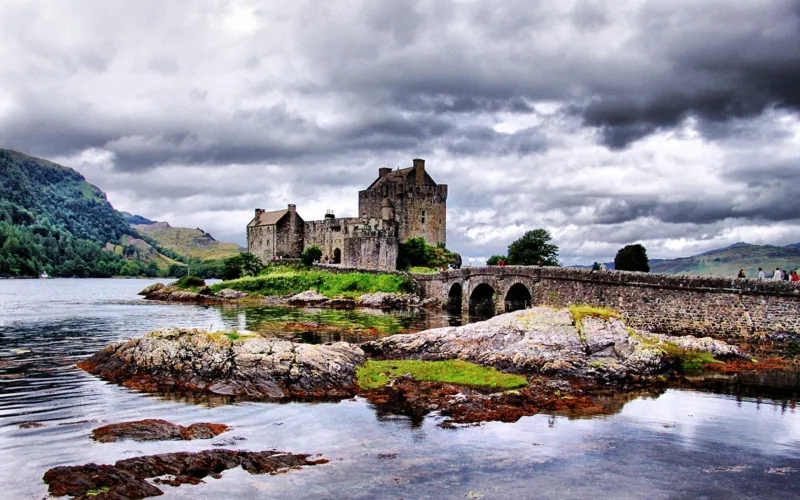
Photo: Scotland Highland geology rock formation landscape aerial exploration, via wallpapercave.com
There is a useful thought experiment that exploration geologists sometimes apply to unfamiliar ground: strip away the place names, anonymise the geological logs, and ask whether the formation in question would attract serious attention if it were located somewhere else. Applied to several of Scotland's least-examined gold-bearing terranes, the answer is consistently, and sometimes startlingly, affirmative.
The geological conditions that have made Scotland intermittently productive for gold over centuries — Precambrian metamorphic sequences, structurally controlled shear zones, hydrothermal systems associated with ancient intrusive events — are not unique to this island. They are recognisable analogues of formations that, in Canada and Australia, now underpin some of the world's most significant gold districts. The difference is not the geology. It is the history of what has, and has not, been done with it.
Why Scotland Was Left Behind
To understand why Scotland's greenfields remain largely underdrilled, it is necessary to understand the economics of exploration as it developed through the twentieth century. The capital that drove the great post-war expansion of global gold mining was overwhelmingly North American in origin, channelled by Canadian and Australian junior miners whose investors expected exposure to jurisdictions where tenure could be secured cheaply, permitting was relatively swift, and infrastructure — roads, power, processing facilities — was either already present or could be assumed.
Scotland offered none of those advantages in a form that suited the junior mining model. Land access was complicated by a fragmented pattern of private estate ownership. Planning processes, particularly in areas covered by national scenic designations, were lengthy and uncertain. And the absence of any significant recent mining history meant there was no local workforce, no established supply chain, and no institutional knowledge base to draw upon.
The result was that Scotland's geological potential was acknowledged in academic literature and government surveys, noted periodically in exploration prospectuses, and then passed over in favour of more tractable opportunities elsewhere. The ground was not uninteresting; it was simply inconvenient.
That calculus is beginning to shift. A combination of depleted easy inventory in established gold districts, rising exploration costs in jurisdictions that have become more rather than less complicated over time, and renewed interest in domestic supply chains is bringing a new generation of geologists back to formations that their predecessors found compelling but impractical.
The Tyndrum–Dalmally Corridor
The area surrounding Tyndrum in Perthshire is the most commercially tested of Scotland's gold-bearing districts, anchored by the Cononish deposit which has been in intermittent development since the 1980s and entered commercial production under Scotgold Resources in recent years. But the Cononish orebody represents only one expression of a mineralised system that extends considerably further along the Tyndrum Fault and its associated structures.
Geological surveys conducted by the British Geological Survey have identified gold-in-soil anomalies at multiple points along the fault corridor that have never been followed up with systematic drilling. The structural setting — a major crustal discontinuity along which hydrothermal fluids have demonstrably migrated — is analogous to the fault-hosted gold systems of the Kirkland Lake district in Ontario, which were themselves underappreciated until a series of deep drilling programmes in the 1990s revealed their full extent.
What has prevented more systematic exploration of the Tyndrum corridor beyond the Cononish immediate area is partly tenure — the surface rights are held by multiple private landowners with varying degrees of enthusiasm for mineral exploration — and partly the planning shadow cast by the Cononish project itself, which spent years in planning limbo before receiving consent. Future explorers in this corridor will need to demonstrate that they have learned from that experience and are prepared to engage with planning authorities and communities from the outset rather than as an afterthought.
The Grampian Highlands: A Dalradian Analogue
The Dalradian Supergroup — the thick sequence of metasedimentary rocks that forms much of the Scottish Highlands — has long been recognised as a potentially gold-fertile package. Its age, metamorphic grade, and structural complexity are broadly comparable to the Birimian metasediments of West Africa, which host world-class deposits in Ghana and Burkina Faso, and to elements of the Archaean sequences in Western Australia.
Within the Grampian Highlands specifically, a belt of Dalradian rocks running from Aberdeenshire through Banffshire has produced gold-in-stream and gold-in-soil anomalies in reconnaissance surveys that have never been followed up at the scale the geochemical signal would seem to justify. Historical records from the eighteenth and nineteenth centuries document alluvial gold workings in several catchments draining this belt, providing the kind of empirical confirmation that geochemical data alone cannot always supply.
The comparison most frequently drawn by geologists familiar with both terranes is to the Otago Schist of New Zealand's South Island, where a similarly metamorphosed sedimentary sequence proved to host economically significant gold mineralisation that was not fully appreciated until modern exploration techniques were systematically applied. Otago is now a productive gold district. The Grampian Highlands equivalent has yet to receive comparable attention.
The barriers here are primarily logistical and financial rather than geological. The terrain is accessible by Scottish standards, and planning constraints, while present, are less severe than in some other Highland locations. What has been lacking is a junior mining company with sufficient conviction in the geological model to commit the multi-season, multi-hole drilling programme that would be required to test the system at meaningful depth.
Sutherland and the Northern Highlands
Sutherland occupies a peculiar position in Scottish gold prospecting lore. It is one of the most consistently productive alluvial gold counties in Britain — the Kildonan Gold Rush of 1869, though modest by global standards, was genuine enough to prompt the Duke of Sutherland to restrict public access — yet it has received almost no systematic hardrock exploration.
This is geologically puzzling, because alluvial gold must derive from a primary source, and the volumes of material recovered from Sutherland's rivers over more than a century imply a bedrock source of some significance. The Helmsdale Granite and associated contact zones are the most frequently cited candidates, but they have been examined only superficially in commercial terms.
The comparison here is instructive. When geologists first began systematically tracing the source of alluvial gold in the Pilbara region of Western Australia in the 1970s, they were working from a similar empirical foundation: known alluvial productivity pointing to an unlocated bedrock source. The subsequent discovery of primary deposits transformed the Pilbara from an alluvial curiosity into one of the world's great gold provinces. Sutherland has never been subjected to the equivalent systematic programme.
The obstacles in Sutherland are real. The county is remote by mainland British standards, infrastructure is sparse, and much of the most geologically interesting ground falls within or adjacent to designated conservation areas. Any serious exploration programme would require substantial logistical investment and a carefully managed community engagement process in an area where the population is small, the landscape is highly valued, and the memory of historical land conflicts remains culturally present.
The Southern Uplands: An Underappreciated Terrane
The Southern Uplands of Scotland — the belt of Ordovician and Silurian turbidites running from the Solway Firth to the North Sea coast — receives far less attention from gold prospectors than the Highlands, and this neglect is not entirely without geological justification. The terrane is structurally complex and the gold-bearing potential is lower than in the Dalradian sequences to the north.
Nevertheless, there are specific areas within the Southern Uplands — particularly around the Leadhills and Wanlockhead district, which has a documented history of gold and base metal production stretching back to Roman times — where the structural setting and associated hydrothermal alteration are suggestive of the kind of polymetallic system that, in analogous settings in the Iberian Pyrite Belt, has proven to host economically significant gold credits.
The Leadhills district is arguably the best-documented historical mining area in Scotland, with records extending over several centuries and a geological database accumulated by successive generations of academic and commercial investigators. What it has not received is modern systematic exploration using the geophysical and geochemical tools that have transformed the economics of brownfield exploration elsewhere in Europe.
What Would It Take?
Across all four of these formations, the requirements for meaningful exploration progress are broadly similar: patient capital prepared to fund multi-year programmes, experienced management teams with credibility in both the geological and regulatory communities, and a willingness to invest in community relationships before a drill bit touches the ground.
None of these requirements is unusual by the standards of modern mineral exploration. Junior mining companies meet them routinely in Nevada, Quebec, and Western Australia. The question is whether Scotland can offer a sufficiently compelling geological proposition to attract that capital and expertise in competition with more established exploration addresses.
The geologists who are beginning to look seriously at Scotland's greenfields believe the answer is yes — not because Scotland is easier than the alternatives, but because the alternatives are becoming harder, and the geological quality of what remains unexplored here is genuinely exceptional. History, in the mineral exploration business, has a habit of eventually rewarding the patient and the contrarian. Scotland's underdrilled formations may yet provide a striking illustration of that principle.