From Ground to Market: Tracing the Commercial Journey of Scottish Gold and What It Means for Your Investment
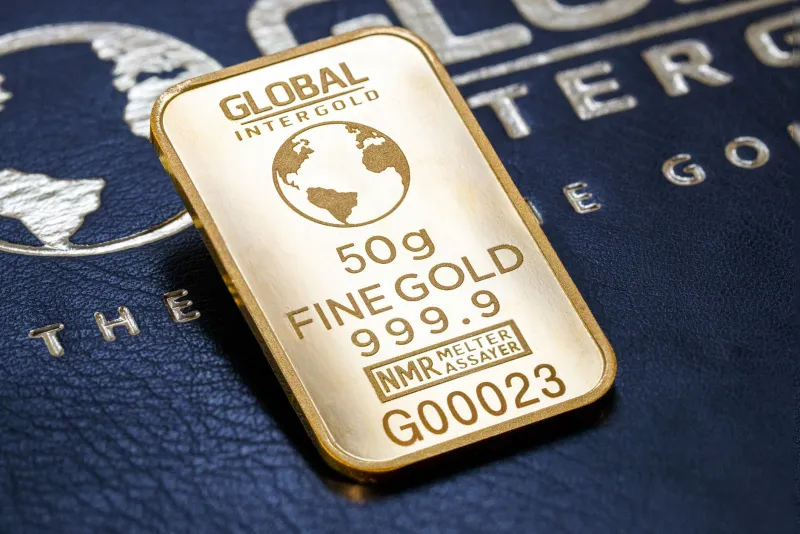
When investors assess a Scottish gold mining project, the natural instinct is to focus on what lies beneath the surface — geological reports, resource estimates, grade projections. These are, without question, important inputs. But the story of Scottish gold does not end at the drill core or the first pour. In many respects, it is only beginning. The commercial journey that follows extraction — through processing, assaying, refining, certification, and eventual sale — determines a significant portion of the value an investor will ultimately realise. And it is a journey riddled with logistical realities that receive far less scrutiny than they deserve.
Processing: The First Transformation
Once gold-bearing material is extracted from a Scottish site, whether from hard rock or alluvial deposits, it must be processed to separate the metal from surrounding host material. For smaller-scale operations, this typically involves gravity concentration and, in some cases, chemical treatment to produce a doré — an alloy of gold and silver that represents the first commercially tradeable form of the metal.
The challenge for Scottish producers at this stage is one of scale and geography. Processing infrastructure in Scotland remains limited, and many operators must either invest heavily in on-site facilities or transport material to processing plants elsewhere in the UK or continental Europe. Each option carries cost implications. On-site processing demands capital expenditure that can strain the budgets of junior mining companies, while off-site processing introduces transport logistics, security requirements, and contractual dependencies with third-party operators.
For investors, the critical question is not merely whether a project can produce doré, but at what cost and with what degree of operational control over the process. A project that relies entirely on third-party processing arrangements may be exposed to pricing changes or capacity constraints that are beyond the operator's influence.
Assaying: Where Value Is Officially Established
Once a doré has been produced, it must be assayed — formally tested to determine its precise gold and silver content. This step is foundational to everything that follows. The assay result defines the metal's commercial value, informs refining contracts, and underpins any certification that may accompany the finished product.
Here, Scotland faces a structural disadvantage that has been noted with increasing frequency in industry circles. The absence of an assay office in Scotland means that domestic producers must send their material to assay facilities elsewhere — principally in London, Birmingham, or Sheffield, where the remaining UK assay offices operate. This is not merely an inconvenience. It introduces time delays, transport costs, and a degree of remove between the point of production and the point of official valuation that can complicate supply chain management and, in some cases, affect the premium a producer is able to negotiate.
The practical implication for investors is straightforward: when evaluating a Scottish mining project, it is worth scrutinising the assaying arrangements in place. Who conducts the assay? Under what contractual terms? How are disputes over results handled? These are operational details that can have a material effect on revenue timelines and pricing outcomes.
Refining: The Domestic Gap
Beyond assaying lies refining — the process by which doré is purified to investment-grade or jewellery-grade metal. This is where the infrastructure deficit becomes most acute. Scotland currently has no commercial gold refinery operating at scale. As a consequence, Scottish doré must travel — often to refineries in continental Europe, where the processing capacity and technical expertise required for high-purity output are concentrated.
This matters commercially for several reasons. First, refining contracts typically involve a treatment charge and a deduction based on the weight of metal recovered, meaning that the terms negotiated with a refinery directly affect net returns. Second, the distance between Scottish production and European refining capacity introduces logistical complexity and cost. Third, and perhaps most significantly, it means that Scottish gold — once refined — often re-enters the market without a clear provenance narrative attached to it. The metal's Scottish origin, which could otherwise command a premium in certain market segments, is effectively dissolved into a broader pool of refined material.
For investors who are drawn to Scottish gold partly because of its provenance value — its association with a specific landscape, a traceable supply chain, or the emerging market for ethically sourced precious metals — this is a meaningful concern. A project that has not considered how to preserve and communicate the provenance of its refined output may be leaving value on the table.
Certification and the Premium Question
The final stage before sale is certification — the formal documentation that accompanies gold into the market and communicates its purity, origin, and compliance with relevant standards. In the UK, hallmarking remains the principal mechanism through which gold purity is officially certified for consumer and trade markets. The hallmarking system, administered by the UK's assay offices, provides a recognised and legally enforceable standard.
For Scottish producers targeting premium market segments — luxury jewellery, bespoke bullion, or the growing market for responsibly sourced metals — certification is not a bureaucratic afterthought. It is a commercial asset. The ability to present Scottish gold with a clear, verifiable chain of custody, from extraction site through processing and assaying to the finished product, creates the foundation for a price premium that cannot be achieved through geological quality alone.
Projects that have invested in traceability systems, engaged with certification frameworks, and established relationships with assay offices are materially better positioned to capture this premium than those that treat post-extraction logistics as a secondary concern.
A Framework for Investor Evaluation
For those assessing Scottish mining projects, the post-extraction journey should be evaluated with the same rigour applied to geological and financial due diligence. A practical framework might consider the following questions.
Does the project have a clearly defined processing route, and what are the associated costs and dependencies? Has the operator established assaying arrangements with a recognised facility, and are the contractual terms transparent? What refining agreements are in place, and how do the treatment charges and metal deductions affect projected revenues? Has the project considered how to preserve and communicate provenance through the supply chain, and does it have access to appropriate certification mechanisms?
A mining project that can provide clear, well-considered answers to each of these questions is demonstrating a level of operational maturity that extends beyond the drill bit. Conversely, a project that has not mapped its route to market with the same care it has applied to its resource estimate may be presenting an incomplete picture of its commercial prospects.
Why the Journey Matters
Scottish gold occupies a distinctive position in the precious metals landscape. Its geological credentials are well established, its provenance carries genuine market appeal, and growing investor interest in traceable, domestically produced commodities creates a favourable backdrop for well-managed projects. But the gap between in-ground potential and realised market value is bridged — or widened — by the quality of the post-extraction journey.
Investors who understand this chain, and who apply appropriate scrutiny to each of its links, are better equipped to distinguish projects that will convert their geological promise into genuine commercial returns from those that will see value lost at every stage between the ground and the market.