Shifting Sands and Rising Waters: What Climate Change Means for Scotland's Alluvial Gold
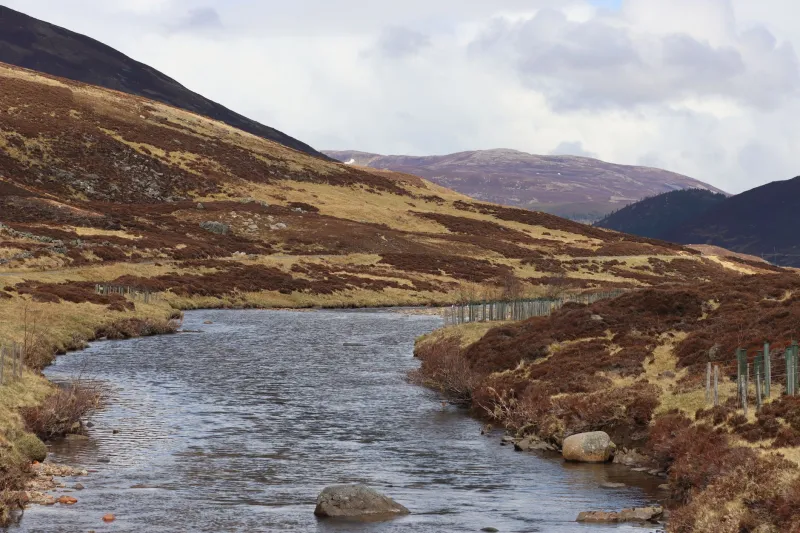
Shifting Sands and Rising Waters: What Climate Change Means for Scotland's Alluvial Gold
Gold does not move quickly. That is one of the foundational truths of placer geology — the study of how dense, chemically inert metal particles are sorted, transported, and concentrated by the mechanical action of flowing water over geological time. A flake of alluvial gold that settles into a gravel bar today may remain there for millennia, undisturbed, waiting for the right combination of flow velocity and substrate geometry to carry it further downstream.
But the rivers doing that sorting are changing. Across Scotland's Highland and upland catchments, precipitation patterns are shifting in ways that climate scientists have been documenting with increasing precision. Rainfall is becoming less predictable in its distribution, more extreme in its episodic intensity, and more erosive in its cumulative effect on hillside soils and valley floors. For gold prospectors — whether weekend panners or serious exploration investors — these changes are not merely background environmental noise. They are actively rewriting the distribution map of Scotland's alluvial gold resource.
The Mechanics of Placer Concentration
To understand why climate matters for alluvial gold, it helps to revisit the basic physics. Gold concentrates in river systems at predictable points: the inside bends of meanders where flow velocity drops, the downstream margins of boulders and bedrock outcrops that create hydraulic shadows, the confluence zones where tributaries enter main channels and energy dissipates, and the bedrock irregularities — potholes, joints, and ledges — that trap heavy particles during flood events.
The critical variable in all of these mechanisms is energy. High-energy flood events strip material from upstream sources, transport it in suspension, and deposit it when velocity falls. The higher the flood peak, the further downstream that material travels before settling. Gold, being exceptionally dense, tends to drop out earlier than lighter sediment fractions — but only if the energy gradient is sufficient to move it in the first place.
This is where changing climate becomes directly relevant. Scotland is experiencing a measurable increase in high-intensity precipitation events — the kind of rainfall that generates flash flooding in steep Highland catchments. These events do not merely redistribute existing alluvial gold; they mobilise gold that has been locked in primary and secondary sources — weathered veins, colluvial fans, and legacy glacial deposits — that lower-energy flow regimes would never disturb.
River Systems Worth Watching
Certain Scottish river systems are better positioned than others to benefit — from a gold prospecting perspective — from increased hydrological energy.
The Helmsdale River in Sutherland, historically one of Scotland's most productive alluvial gold sources, drains a catchment that includes known lode mineralisation in the Strath Ullie area. Increased erosion of its upper valley slopes, driven by more intense autumn and winter precipitation, is likely to introduce fresh material into the active channel system. Prospectors familiar with the Helmsdale's traditional productive reaches should be alert to the possibility that new concentrations are forming in locations that were unremarkable a generation ago.
The Tay system, Scotland's largest by discharge volume, presents a different but equally interesting picture. Its extensive catchment encompasses several geologically prospective areas in Perthshire, and the river's capacity to rework its own floodplain deposits during major flood events — of which recent decades have seen several notable examples — means that previously buried concentrations may be brought back into the active sediment transport system. The 2023 and earlier Tay floods, whilst devastating for affected communities, will have reworked considerable volumes of valley-floor sediment.
Further west, the river systems draining the Argyll and Bute uplands — the catchments surrounding the Cononish gold deposit and its satellite mineralisation — are subject to the particularly intense orographic precipitation that characterises Scotland's Atlantic-facing hills. Accelerated hillside erosion in these catchments is likely to be delivering fresh gold-bearing material to valley floors at rates that have no modern precedent.
Erosion, Exposure, and the Glacial Legacy
Scotland's alluvial gold resource is, in large part, a glacial inheritance. The Pleistocene ice sheets that covered the country until approximately twelve thousand years ago were extraordinarily effective at grinding bedrock — including gold-bearing quartz veins — and redistributing the resulting sediment across valley floors and coastal margins. Much of that glacially derived material has been sitting in storage, covered by peat, till, and fluvial sediment, ever since.
Climate-driven peat erosion is now exposing elements of that glacial legacy. Across the Scottish uplands, peat cover is thinning and fragmenting at an accelerating rate, driven by a combination of changing precipitation patterns, reduced frost frequency, and altered vegetation dynamics. Where peat overlies gold-bearing glacial sediments — as it does in numerous Highland locations — its removal is, in effect, a natural stripping operation that brings previously inaccessible material into the reach of both river action and surface prospecting.
For exploration investors, this dynamic has a specific implication: geochemical surveys conducted over peat-covered terrain ten or twenty years ago may now underestimate the gold potential of those same areas, because the peat that was masking the signal has partially or wholly eroded away.
Practical Guidance for the Forward-Thinking Prospector
Translating this analysis into actionable prospecting strategy requires a degree of systematic thinking that casual panners rarely apply. The following principles are worth incorporating into any serious approach to Scottish alluvial gold prospecting in the current climate context.
Monitor flood event records. The UK Centre for Ecology and Hydrology publishes river flow data for gauged catchments across Scotland. Prospectors who track peak flow events in their target rivers will be better positioned to visit productive reaches shortly after major floods, when freshly deposited material is most accessible.
Revisit historically unproductive locations. If your prospecting knowledge of a particular river is based on experience or accounts from more than a decade ago, the baseline has shifted. Locations that yielded nothing previously may now be receiving fresh input from upstream sources that were geologically inert under the old hydrological regime.
Pay attention to tributary confluences. In a higher-energy hydrological environment, tributary confluences become more dynamic depositional environments. Material that enters a main channel during a flash flood event will often drop its heaviest fraction — including gold — within a short distance of the confluence point.
Consider seasonal timing. The shift towards more intense late-autumn and winter precipitation in Scotland means that the period immediately following the main flood season — typically late winter to early spring — may now represent the optimal prospecting window, before spring vegetation growth obscures newly deposited material.
Climate as Competitive Advantage
For exploration companies and serious investors, the broader message is one of opportunity rather than disruption. The same climate dynamics that complicate agricultural and infrastructure planning in the Scottish Highlands are, from a precious metals perspective, functioning as a low-cost geological processing system — mobilising, sorting, and concentrating gold that has been effectively locked away since the last glaciation.
Those who understand this dynamic, and who incorporate climate-driven hydrological change into their prospecting and exploration models, will hold a genuine analytical edge over those who continue to rely on historical data alone. Scotland's rivers are doing work that no exploration budget could replicate. The task for the informed investor and prospector is simply to read that work correctly.