Marking Its Own: The Economic and Cultural Case for a Scottish Assay Office
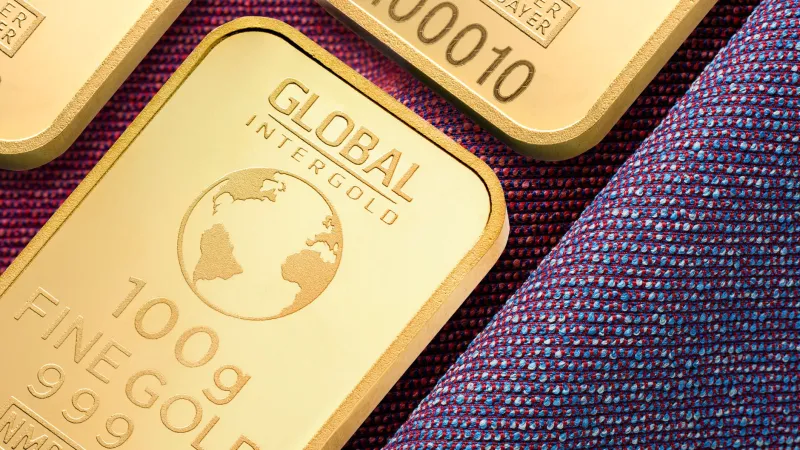
Scotland has been producing gold for centuries. From the alluvial rushes of Kildonan in the nineteenth century to the modern exploration programmes advancing across Perthshire and the Southern Uplands, the country possesses genuine precious metal credentials. And yet, when that gold is refined and prepared for sale, the hallmark it receives — the official stamp of assayed purity that underwrites its value in the marketplace — comes from an office in Birmingham, London, Edinburgh's near-neighbour Sheffield, or Dublin. Not from Scotland itself.
That absence is more than a bureaucratic curiosity. It represents a quiet but consequential export of economic value, institutional prestige, and national identity. The question of whether Scotland should establish its own assay office is one the domestic precious metals industry has periodically raised without resolution. Given the current trajectory of Scottish gold exploration and the growing appetite among investors for provenance-verified commodities, it is a question worth examining with some rigour.
What an Assay Office Actually Does — and Why Location Matters
The UK's hallmarking system is governed by the Hallmarking Act 1973, which requires that articles of gold, silver, platinum, and palladium above certain weight thresholds be independently tested and marked before being described by their metal content. Four Assay Offices currently hold statutory authority to apply UK hallmarks: the Goldsmiths' Company Assay Office in London, the Birmingham Assay Office, the Sheffield Assay Office, and the Edinburgh Assay Office — which, it should be noted, does exist and serves Scotland in a formal sense.
However, the Edinburgh Assay Office, whilst a legitimate and respected institution, operates primarily as a testing and marking facility for finished articles submitted by jewellers and manufacturers. It does not function as an integrated hub for raw material assay, bullion certification, and the kind of end-to-end precious metals authentication infrastructure that would anchor a sovereign Scottish gold identity. The distinction matters. A country serious about building a branded precious metals sector — one capable of commanding premium pricing on the basis of verified origin — needs more than a marking desk. It needs an institution.
The Value That Leaves Scotland Unmarked
Consider how other small nations have approached this challenge. Switzerland, despite producing negligible quantities of raw gold, has constructed one of the world's most trusted precious metals brands through rigorous assay infrastructure, transparent chain-of-custody standards, and the deliberate cultivation of institutional credibility. The Swiss hallmark carries a premium that has nothing to do with geology and everything to do with governance.
Nearer to home, the Republic of Ireland has leveraged its assay infrastructure — through the Assay Office Ireland — to support a domestic jewellery and crafts sector that trades explicitly on provenance. Irish gold and silver articles bearing the Dublin hallmark command recognition in export markets that a generic European certification would not achieve.
Scotland's position is arguably stronger than either of these examples in one crucial respect: it actually has gold in the ground. The Cononish mine in Argyll and Bute, operated by Scotgold Resources, has demonstrated that Scottish gold can be commercially extracted. Exploration activity across multiple corridors suggests the supply pipeline, whilst modest by global standards, is real and growing. The raw material exists. What Scotland currently lacks is the institutional architecture to transform that raw material into a fully authenticated, origin-branded commodity.
The Regulatory Landscape: Complexity Without Insurmountability
Establishing a new statutory assay office in the UK is not a trivial undertaking. The Hallmarking Act 1973 would require amendment — or at minimum, a Statutory Instrument authorising a new body — to grant hallmarking authority to any institution beyond the existing four. This is a matter for Westminster, which introduces an immediate political dimension that Scottish proponents would need to navigate carefully.
There is, however, precedent for expanding the framework. The inclusion of palladium as a hallmarkable metal in 2010 demonstrated that the Act is not immovable. A well-constructed case — one grounded in commercial justification, consumer protection standards, and alignment with existing UK precious metals regulation — could, in principle, secure the necessary legislative accommodation. The Edinburgh Assay Office itself could conceivably serve as the foundation for an expanded institution with a broader mandate, rather than requiring an entirely new body to be created from scratch.
From a commercial standpoint, the challenge is one of critical mass. Assay offices require a sufficient volume of articles and materials to operate viably. Scotland's current gold output, whilst growing, remains limited. Any business case for an expanded Scottish assay infrastructure would need to demonstrate a credible pipeline of work — drawing not only on domestic mining output but also on the substantial Scottish jewellery manufacturing and crafts sector, which currently submits articles to offices elsewhere in the UK.
Brand Prestige as a Financial Argument
Perhaps the most compelling case for a Scottish assay institution is not regulatory but commercial. The global market for ethically sourced, origin-verified precious metals is expanding. Consumers and institutional buyers alike are increasingly willing to pay a premium for commodities whose provenance can be independently authenticated. A Scottish gold hallmark — one that certifies not merely purity but geographic origin, extraction method, and chain of custody — would be a genuinely differentiated product in a crowded market.
The tourism and cultural dimensions reinforce this. Scottish gold jewellery bearing a distinctive Scottish mark would carry narrative value that English-hallmarked equivalents simply cannot replicate. For the luxury goods sector, for heritage craftspeople, and for the growing number of investors seeking tangible, story-rich assets, provenance is not a peripheral concern. It is a primary driver of value.
A Long Game Worth Playing
None of this will happen quickly. The regulatory pathway is complex, the commercial case requires careful construction, and the political environment demands deft handling. There will be those within the existing assay establishment who view any expansion of the framework with scepticism, and their concerns about standards and oversight are not without merit.
But the fundamental argument is sound. A nation that produces gold and lacks the institutional infrastructure to authenticate and brand that gold on its own terms is leaving value on the table — economic value, cultural value, and the kind of long-term industry credibility that compounds over decades. Scotland has built world-class institutions in fields ranging from law to finance to medicine. There is no principled reason why precious metals authentication should remain an exception.
The assay office question deserves a serious answer. Scotland's emerging gold sector, and the investors backing it, deserve no less.