Casks, Carats, and Capital: What Scottish Gold Can Learn from the Whisky Investment Boom
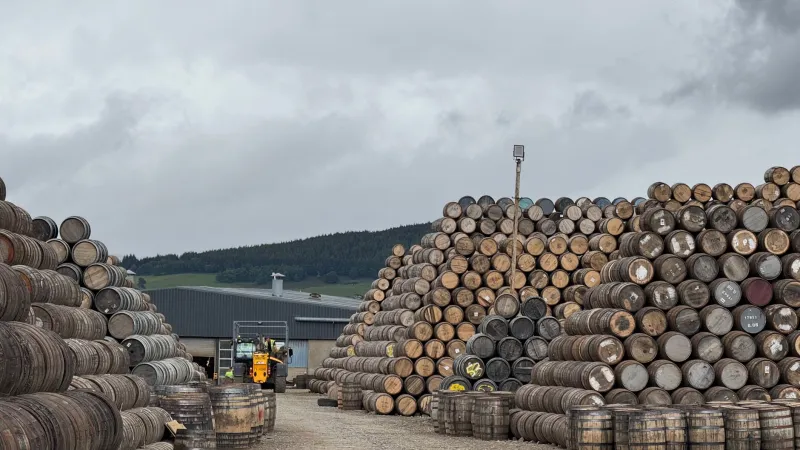
At first glance, a bonded warehouse in Speyside and a drill site in the Southern Uplands appear to occupy entirely separate worlds. One deals in amber liquid maturing quietly in oak; the other in rock cores and resource estimates. Yet strip away the surface differences and a striking structural resemblance emerges — one that investors, fund managers, and commodity strategists would do well to examine carefully.
Both Scotch whisky and Scottish gold are, at their core, stories about place. And in today's alternative investment landscape, place has never been worth more.
The Provenance Premium: Why Origin Commands a Price
The concept of provenance — the verifiable, legally protected claim that a product originates from a specific geography — underpins the commercial value of Scotch whisky in ways that are rarely fully appreciated outside the industry. Under Scotch Whisky Regulations 2009, the designation 'Scotch' is a protected geographical indication. It cannot be applied to any spirit distilled outside Scotland, aged for fewer than three years, or produced without adherence to strict production standards. That legal scaffolding transforms a commodity into a premium asset.
Scottish gold carries an analogous, if less formally codified, provenance story. Gold recovered from Scottish rivers, hillsides, and mineralised veins cannot be replicated by a mine in Nevada or a processing plant in South Africa. When a piece of jewellery is described as containing Scottish gold, or when a bullion product is marketed with documented chain-of-custody traceability back to a specific Scottish site, it commands attention — and increasingly, a price premium — that generic refined gold simply cannot match.
The whisky industry recognised this dynamic decades ago and built an entire commercial architecture around it. The Scottish gold sector is only beginning to explore the same territory.
Scarcity as a Value Driver
Whisky investors are well acquainted with the scarcity narrative. Single malt expressions from closed distilleries, limited vintage releases, and casks from particularly productive years all trade at multiples far above their intrinsic liquid value. Scarcity, whether natural or manufactured through deliberate production limits, creates the conditions in which speculative and collector demand can sustain prices well above underlying commodity benchmarks.
Scottish gold is scarce in a more fundamental, geological sense. Scotland's gold endowment, while genuinely significant by European standards, is distributed across relatively small, structurally complex deposits. Cononish, the country's sole operating gold mine, produces at a modest scale compared to major international operations. Exploration activity, though growing, remains constrained by planning challenges, capital availability, and the sheer difficulty of working in remote Highland terrain.
This scarcity is not a weakness to be apologised for. Framed correctly, it is precisely the quality that makes Scottish gold interesting to the same investor profile currently paying five and six-figure sums for a single whisky cask. The question is whether the gold sector can articulate that scarcity story with the same sophistication that distilleries and specialist brokers have applied to aged spirit.
Junior Miners and Independent Distilleries: A Structural Comparison
The economics of an independent Scotch whisky distillery share notable characteristics with those of a junior gold mining company. Both operate with long lead times between initial capital outlay and commercial return. A new-make spirit requires a minimum of three years before it legally qualifies as Scotch, and meaningful premium value typically requires a decade or more of maturation. A junior miner, meanwhile, may spend five to ten years moving from initial exploration licence through resource definition, feasibility study, permitting, and construction before a single ounce is poured.
Both models therefore demand patient capital — investors willing to accept illiquidity in exchange for the prospect of disproportionate returns once the asset matures or the project reaches production. Both also carry asymmetric risk profiles: the majority of exploration projects, like the majority of new distillery ventures, will not deliver the returns their early backers hoped for. But those that do succeed can generate exceptional value, particularly where the underlying product carries strong brand equity and provenance credentials.
The whisky sector has, over the past two decades, developed a relatively sophisticated retail investment infrastructure to accommodate this dynamic. Cask ownership platforms, specialist brokers, independent bottler networks, and auction houses have collectively created accessible entry points for private investors who lack the resources or appetite to finance an entire distillery. Fractional ownership models and third-party storage arrangements have further lowered barriers to participation.
The Scottish gold investment market has no equivalent ecosystem — yet. Direct equity stakes in AIM-listed junior miners remain the primary route for most UK retail investors, supplemented by physical bullion products. The more nuanced, provenance-led investment propositions that have proved so effective in whisky remain largely underdeveloped.
What a Mature Infrastructure Might Look Like
For Scottish gold to attract the same breadth of high-net-worth investor interest currently flowing into premium whisky, several structural developments would need to occur in parallel.
First, traceability and certification frameworks would need to mature significantly. Whisky's geographical indication protections, combined with distillery-level provenance documentation, give buyers confidence in what they are purchasing. Scottish gold would benefit from equivalent chain-of-custody standards — from drill site through processing, refining, and hallmarking — ideally supported by a domestic assay infrastructure capable of certifying Scottish origin at point of production.
Second, the narrative around Scottish gold as a distinct asset class would need sustained, credible communication to the investor community. The whisky industry benefits from decades of investment in storytelling — through distillery tourism, brand heritage marketing, and a specialist media ecosystem. Gold exploration companies in Scotland have historically communicated primarily with institutional and technical audiences. Broadening that conversation, without sacrificing accuracy or rigour, represents both a challenge and an opportunity.
Third, accessible investment structures would need to emerge. Whether through royalty financing arrangements, structured products linked to Scottish gold output, or provenance-certified bullion programmes marketed directly to retail investors, the sector requires mechanisms that allow participation below the threshold of direct equity investment in a junior mining company.
Two Assets, One Island, One Argument
Scotland's global reputation rests, in no small part, on two commodities that the rest of the world cannot replicate: its whisky and its landscape. Gold, recovered from that same landscape and carrying the same irreproducible provenance, has the raw materials to join whisky as a recognised and respected alternative investment category.
The whisky sector did not arrive at its current market position by accident. It was built through consistent quality standards, intelligent branding, and the patient construction of investor confidence over many years. The Scottish gold industry has the geological foundation. What it requires now is the commercial imagination — and the institutional will — to build something comparable above ground.
For investors already comfortable with the patience that premium whisky demands, Scottish gold may represent the next logical step: a tangible, traceable, irreplaceable asset rooted in one of the world's most distinctive and commercially potent places of origin.