From Kildonan to the Cairngorms: Scotland's Gold Mining Past and Its Legacy for Modern Prospectors
From Kildonan to the Cairngorms: Scotland's Gold Mining Past and Its Legacy for Modern Prospectors
When most people think of gold rushes, their minds travel to the American West, the Klondike, or the dusty plains of colonial Australia. Few would instinctively look northward to the Scottish Highlands — yet Scotland possesses one of the most underappreciated gold mining histories in Europe. The geological record is compelling, the archival evidence is rich, and the parallels with today's commercial prospecting landscape are striking in ways that reward careful study.
The Kildonan Rush: Scotland's Most Celebrated Gold Fever
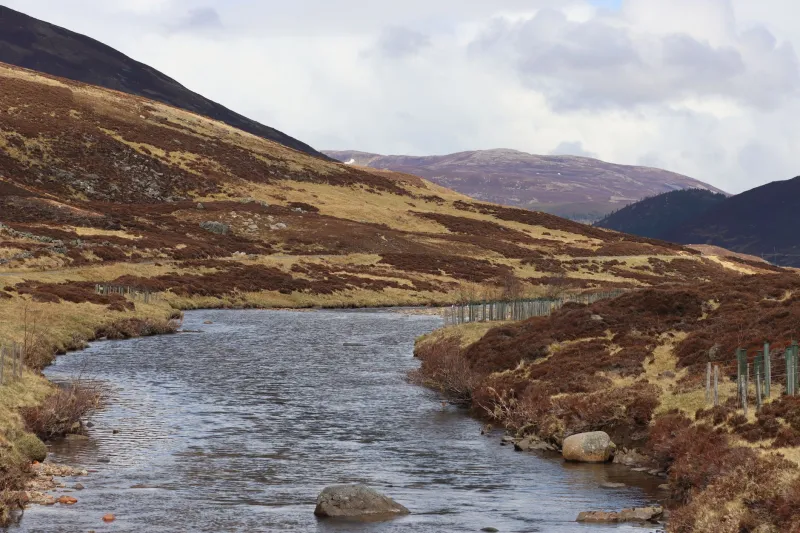
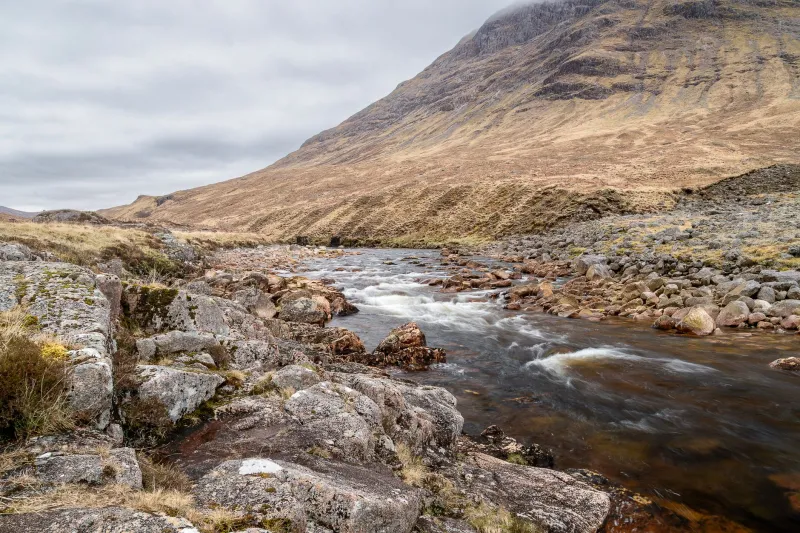
The year 1869 marked a watershed moment in Scottish mining history. Robert Gilchrist, a Sutherland-born prospector who had returned from the Australian goldfields, began panning the gravels of the Strath of Kildonan — a remote glacial valley carved by the River Helmsdale in the far north of Scotland. What he found was not merely flecks of colour in the pan, but quantities sufficient to trigger a genuine prospecting frenzy.
Within months, hundreds of hopeful diggers had descended upon Kildonan, erecting temporary camps and working the river gravels with a determination that would not have looked out of place on the banks of the Sacramento. At its peak, the settlement of Baile an Òr — literally 'Gold Town' in Scottish Gaelic — housed a community of prospectors who extracted meaningful quantities of alluvial gold from the Kildonan Burn and its tributaries.
Contemporary accounts in the Inverness Courier and the John o' Groat Journal documented finds of remarkable size, including nuggets exceeding a quarter of an ounce. The Duke of Sutherland, who held the mineral rights to the land, initially tolerated the incursion but ultimately curtailed prospecting activity in 1870, partly to protect salmon fishing — a decision that echoes through Scottish mineral law debates to this day.
The Kildonan episode produced an estimated £12,000 worth of gold at Victorian prices, a figure that, whilst modest by international standards, confirmed beyond reasonable doubt that Scotland's geology was capable of hosting economically significant gold deposits.
Lesser-Known Episodes: The Southern Uplands and Aberdeenshire
Kildonan dominates the popular narrative, but it was far from the only episode of note. The Leadhills and Wanlockhead district of the Southern Uplands — straddling the border between Lanarkshire and Dumfriesshire — yielded gold alongside its better-documented lead and silver deposits from at least the sixteenth century. The Crawford Muir goldfield supplied metal for the Scottish crown jewels, a provenance that lends the region an almost mythological significance.
Historical records indicate that James V of Scotland received a gift of gold mined from Crawford Muir in 1526, and subsequent monarchs drew upon the same source for ceremonial purposes. The Leadhills district continued to produce gold sporadically through the eighteenth and nineteenth centuries, with small-scale operators working the Glengonnar Water and associated burns.
Further north, Aberdeenshire and the Grampian massif have yielded consistent alluvial gold finds over several centuries. The geology of the region — characterised by ancient metamorphic and igneous basement rocks intersected by auriferous quartz veins — closely mirrors productive gold districts elsewhere in the world. Prospectors working the Don and Dee catchments during the Victorian era reported regular finds, though the scattered and often informal nature of this activity means the documentary record is fragmentary.
Geological Groundwork: What the Past Tells Us About the Present
The historical pattern of Scottish gold finds is not random. Modern geological mapping, much of it undertaken by the British Geological Survey over the past four decades, has confirmed that Scotland's gold mineralisation follows predictable structural controls. The Dalradian Supergroup — a vast sequence of metamorphosed sedimentary and volcanic rocks spanning the Central Highlands — hosts the majority of known occurrences, with gold concentrated along shear zones, fault systems, and the margins of intrusive igneous bodies.
The Cononish gold-silver deposit near Tyndrum in Perthshire, currently the most advanced commercial gold mining project in the UK, sits within precisely this geological framework. Its discovery and development drew directly upon lessons learned from historical prospecting, including the recognition that surface alluvial gold, such as that found at Kildonan, frequently points upstream to a primary bedrock source.
This relationship between historical placer finds and modern hard-rock exploration is one of the most practically significant legacies of Scotland's gold rush episodes. Wherever Victorian prospectors panned colour from a Highland burn, geologists now look upslope for the source reef — a methodology that has guided exploration programmes from Sutherland to Argyll.
Key Figures and Their Enduring Influence
Beyond Robert Gilchrist, several figures shaped the trajectory of Scottish gold prospecting in ways that deserve wider recognition. Dr John S. MacPherson, a geologist working in the late nineteenth century, produced the first systematic account of Scottish gold occurrences, drawing on both field observation and historical records to create a distribution map that remained the standard reference for decades.
In the twentieth century, the work of the British Geological Survey's mineral reconnaissance programme — active from the 1970s onward — transformed understanding of Scotland's gold potential. Geologists including Dr Donald Coats and colleagues produced detailed stream sediment surveys and follow-up investigations that identified Cononish and several other targets as warranting serious commercial attention.
These researchers, working with the same spirit of enquiry that animated Gilchrist and his contemporaries, effectively bridged the gap between historical anecdote and modern resource estimation.
Regulatory Inheritance: From Ducal Prerogative to Crown Estate Oversight
The regulatory landscape governing Scottish gold mining today bears clear imprints of its historical antecedents. The Duke of Sutherland's closure of the Kildonan goldfield in 1870 illustrated, with uncomfortable clarity, the tension between mineral rights holders, surface landowners, and prospecting communities — a tension that persists in modified form within the current licensing framework.
The establishment of Crown Estate Scotland's role in managing mineral rights, combined with the planning and environmental consenting processes now administered through Scottish Government channels, represents the institutional resolution of conflicts that Victorian prospectors navigated through informal negotiation and occasional confrontation.
For investors and operators considering entry into the Scottish gold sector, this historical context is more than background colour. It explains why the regulatory framework is structured as it is, why community relations remain a critical success factor in Highland mining projects, and why the provenance and stewardship of mineral rights carry weight that purely financial analysis might overlook.
A Living Legacy
Scotland's gold rush history is not a closed chapter. It is an active reference point for geologists, investors, regulators, and local communities navigating the opportunities and responsibilities that come with mineral-rich terrain. The gravels of the Kildonan Burn still yield gold to licensed recreational panners each summer. The Cononish mine continues to advance toward full production. And exploration licences covering significant portions of the Dalradian belt remain active across the Highlands.
The prospectors of 1869 could not have imagined the sophisticated resource estimation techniques, environmental assessment regimes, and institutional investment frameworks that now surround their successors. But they would, perhaps, recognise the essential dynamic: a landscape of exceptional geological promise, a regulatory environment in flux, and the enduring human instinct to follow the colour upstream.