Common Ground, Common Wealth: Can Community-Led Prospecting Unlock Gold's Promise for Rural Scotland?
Common Ground, Common Wealth: Can Community-Led Prospecting Unlock Gold's Promise for Rural Scotland?
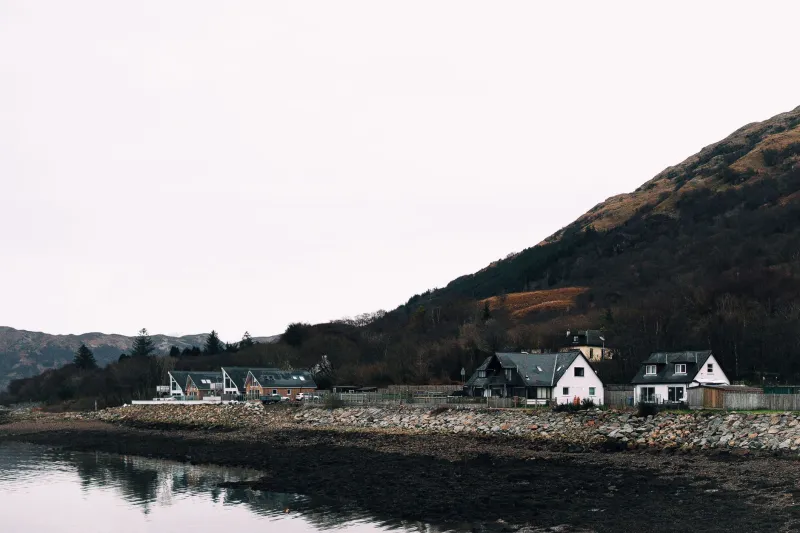
Scotland's gold-bearing rivers wind through some of the most sparsely populated landscapes in western Europe. The Helmsdale, the Tay, the Strath of Kildonan — these are places where communities have contracted sharply over generations, where school rolls dwindle and local businesses close quietly without fanfare. Yet beneath the peat and gravel, a resource of genuine commercial interest persists. The question being asked with increasing seriousness by rural development practitioners, community land activists, and a handful of forward-thinking local authorities is this: could the communities who live alongside Scotland's gold country become its primary beneficiaries, rather than its passive bystanders?
The answer is not simple. But neither, it turns out, is it obviously no.
Scotland's Community Ownership Revolution: A Proven Template
Scotland already possesses one of the most sophisticated community land ownership frameworks in the developed world. The Land Reform (Scotland) Act 2003 and its 2016 successor created statutory rights of community buyout that have transferred hundreds of thousands of acres into collective ownership — from the Isle of Eigg to the North Harris Trust, from Assynt to Langholm. These are not merely symbolic transfers. Community-owned estates have generated renewable energy income, restored native woodlands, built affordable housing, and reversed population decline in measurable terms.
The Gigha Heritage Trust, for instance, transformed a depopulated island into a functioning community enterprise within a decade of its buyout. North Harris has leveraged land ownership into a diversified income base that funds local employment and infrastructure. These precedents matter because they demonstrate that rural Scots communities are capable of managing complex natural resource enterprises — not as passive custodians, but as active commercial operators.
Alluvial gold prospecting, properly structured, fits neatly within this existing architecture. It is a natural resource activity, it is geographically bounded, and it can be organised at a scale that suits community enterprise rather than corporate extraction.
The Legal Landscape: Navigable, But Not Without Obstacles
Any community wishing to establish a gold prospecting venture in Scotland must first reckon with the Crown's longstanding mineral rights position. As covered extensively in this publication's earlier analysis, gold and silver in Scotland are reserved to the Crown under ancient prerogative, administered through Crown Estate Scotland. This means that even a community land trust holding the surface title to an estate does not automatically hold the right to extract precious metals from its land.
However, this is not an insurmountable barrier. Crown Estate Scotland has, in recent years, demonstrated a willingness to issue prospecting and extraction licences to smaller operators, and there is no legal reason why a properly constituted community enterprise could not apply for and hold such a licence. The process requires demonstrating operational competence, environmental compliance, and — crucially — a credible plan for managing the land responsibly.
Planning consent under Scots law adds a further layer of complexity. Small-scale alluvial operations are generally treated more leniently than hard-rock mining proposals, but any commercial activity will require formal consent from the relevant local authority, likely accompanied by an environmental impact assessment. Highland Council and Dumfries and Galloway Council, the two authorities most likely to encounter such applications, have no established precedent for community gold ventures — meaning early engagement and professional legal advice are essential, not optional.
Revenue Realism: What Could Community Prospecting Actually Generate?
It is important to resist romantic overstatement. Scotland's alluvial gold deposits, while genuine and historically significant, are not the Klondike. Alluvial operations in the Helmsdale catchment and Leadhills area have demonstrated consistent, if modest, recoverable gold. Commercially organised ventures with proper equipment — sluices, dredges, and systematic sampling — can generate meaningful yields, but the economics depend heavily on gold prices, operational efficiency, and the cost of regulatory compliance.
At current gold prices, a well-managed community prospecting operation working a productive stretch of river during the viable season could realistically generate tens of thousands of pounds annually. That figure is not transformative in isolation, but in a village of two hundred people, a community enterprise turning over £40,000 to £80,000 per year — while also providing local employment and attracting prospecting tourism — represents a material contribution to the local economy.
The tourism dimension deserves particular attention. Recreational gold panning already draws visitors to sites like Wanlockhead and Baile an Or in Sutherland. A community venture offering guided prospecting experiences, equipment hire, and associated hospitality could multiply revenue well beyond raw metal recovery. The experiential economy is a genuine and growing market, and Scottish gold carries an authenticity premium that no synthetic product can replicate.
Social and Cultural Value: The Case Beyond the Balance Sheet
Economic arguments, however carefully constructed, rarely capture the full picture when it comes to community enterprise. The social and cultural value of a locally-owned gold prospecting venture extends considerably beyond its annual turnover.
There is the question of ownership itself. Communities that hold a stake in the resources of their land develop a qualitatively different relationship with that land — one characterised by stewardship, pride, and long-term thinking. In a Highland glen where young people have been leaving for generations, a community enterprise that offers meaningful local employment and a genuine share in natural wealth may prove a more effective retention tool than any government grant scheme.
There is also the matter of historical reconnection. Scotland's gold rush of 1869 in the Strath of Kildonan brought thousands of prospectors to Sutherland, generating a brief but vivid episode of economic activity in an area already scarred by clearance. A community-owned revival of that tradition — on the community's own terms, for the community's own benefit — carries a symbolic weight that purely commercial ventures cannot match.
Building a Viable Model: What Would It Take?
For a community gold prospecting venture to move from aspiration to operation, several conditions must be met. First, the community must secure either surface land ownership or a formal agreement with the landowner permitting prospecting activity. Second, a licence application to Crown Estate Scotland must be prepared and approved. Third, planning consent must be obtained. Fourth, and perhaps most importantly, the venture requires a governance structure — whether a community benefit society, a Scottish Charitable Incorporated Organisation, or a community interest company — that ensures profits flow back to the community rather than to external shareholders.
Funding for initial capital expenditure — equipment, legal fees, environmental surveys — could plausibly be sourced through the Scottish Land Fund, which has historically supported community buyouts and associated enterprise development. The Scottish Government's Rural and Islands Housing Fund and various LEADER programme successors may also offer relevant support mechanisms.
None of this is straightforward. Community enterprises require sustained volunteer energy, professional governance, and a tolerance for bureaucratic complexity that not every rural community can sustain. But the toolkit exists, the precedents are encouraging, and the resource is there in the ground.
A Different Kind of Gold Rush
Scotland's gold has, for too long, been framed as an opportunity for those with capital — exploration companies listed on distant stock exchanges, individual investors seeking portfolio diversification, prospectors from elsewhere who drive north for a weekend and drive home with their finds. The community ownership model inverts that logic entirely.
It positions the people who live alongside Scotland's gold-bearing rivers not as scenery, but as stakeholders. Not as passive beneficiaries of trickle-down economic activity, but as owners of a genuine productive asset. Whether that model can be made to work at sufficient scale to reverse rural depopulation is a question that only time and determined effort will answer. But as a contribution to the economic resilience of Scotland's most fragile communities, the case for community gold deserves serious and sustained attention.